
Legislation would bring Massachusetts to nearly 50% green energy in 2030
Yesterday, Representative Sánchez joined his colleagues in the House of Representatives to pass legislation increasing the Class I Renewable Portfolio Standard, establishing a clean peak standard, and increasing energy efficiency standards. The bills represent a significant step forward and build on Massachusetts’ worldwide leadership in clean energy.
Renewable Portfolio Standard
The House legislation is a commitment to ensuring that the electric grid is reliable and powered by clean energy. It does this by increasing the Class I Renewable Portfolio Standard (RPS). The RPS requires that electricity suppliers purchase a certain amount of renewable energy each year, and that the amount increases annually.
The RPS began with a compliance obligation of 1% in 2003, and increased by 0.5% annually until it reached 4% in 2009, when it then began increasing 1% annually. Currently, the RPS is at 13%. This legislation increases the RPS by 2% annually from the years 2020 to 2030, resulting in a 35% requirement by 2030.
In combination with Massachusetts’ other renewable energy policies, this means Massachusetts will have 48.69% clean energy by 2030:
- Class I RPS Increase (the basis of today’s bill): 35%
- Class II RPS: 2.69%
- Class II RPS Waste-to-Energy: 3.5%
- Alternative Portfolio Standard: 7.5%
- Total: 48.69% clean energy by 2030, right alongside peer states (CA, NY, NJ)
It should be noted that in 2016, the Legislature nearly unanimously passed An Act relative to Energy Diversity, which required Massachusetts’ utilities to procure long-term contracts for offshore wind and hydropower.
While hydropower is not included in the RPS, when you take it into account, Massachusetts will be 68.69% clean energy by 2030.
This is an incredibly important step forward to ensure Massachusetts has a clean energy economy. The RPS has a butterfly effect, impacting states throughout New England. The House's RPS increase, couple with Connecticut's RPS increase in 2018, has the potential to create up to 20,000 in-region jobs. Massachusetts is sending a clear signal to the world that clean energy is our future.
Clean Peak Standard
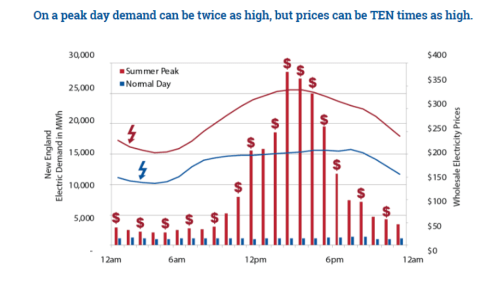
When temperatures get extremely high, as was seen in recent weeks, people turn on their air conditioners, and it puts significant pressure on the grid. Fossil fuel energy like oil and coal have to kick in to meet demand. These are called “peak hours.”
The House’s bill creates a Clean Peak Standard to pair energy storage with renewable energy in order to make renewable energy available during our most expensive and highest-emitting hours of electricity consumption. With this legislation, Massachusetts would be the first state in the nation to codify clean peak standard.
The legislation always requires a data-driven approach, requiring utility companies to submit a yearly report to the Department of Public Utilities. The report will include a heat map that shows how much energy is on the grid, highlighting the most energy-congested areas that are most likely to need new infrastructure upgrades to sustain that energy traffic.
It also requires a feasibility study on using mobile battery storage system to respond to weather emergencies and power outages, and to help take some pressure off of the most congested areas of the grid when not responding to emergencies.
Paired with storage, which the House funded in the environmental bond bill, this legislation will ensure grid reliability, lower load, and electric costs, and overall shrink Massachusetts’ carbon footprint.
Energy Efficiency
The final bill passed by the House today increases standards for energy efficiency. The previous two bills ensure that the supply of energy is clean – energy efficiency works to drive down demand, thereby increasing the percentage of renewables being used to power the grid.
It is not the most glamorous issue but increasing energy efficiency standards beyond the federal standards will have long-lasting impacts. One example is that the bill increases standards for public lavatory faucets. A faucet at Fenway Park is used frequently throughout the baseball season, so increasing the efficiency can have a drastic effect lowering costs for the Red Sox, but also limiting the impact on the environment.
Massachusetts is already ranked #1 for energy efficiency. This legislation affirms that position and will make renewable energy a larger portion of energy use in the Commonwealth.
For a full list of appliance standards, click here.
Bottom Line
This combination of legislation is an affirmation of the Houses’ commitment to a clean energy future. It works to increase grid resiliency, increase clean energy, diversify the energy portfolio, and control costs in a responsible manner. Massachusetts has a broad array of policies to incentive clean energy, including various RPS policies and mandating long-term contracts, as was done in the 2016 legislation.
These policies work in tandem with the House’s significant budget investments in environmental protection, watershed management, natural resource stewardship, and climate change planning and adaption.
In 2008, the Commonwealth committed to emissions-reduction goals for 2020 and 2050. The goals of reducing greenhouse gases drive Massachusetts' energy policy. These bills build on Massachusetts’ climate leadership and set the Commonwealth on a sustainable path for generations to come.